Waking up exhausted - when sleep is no longer enough
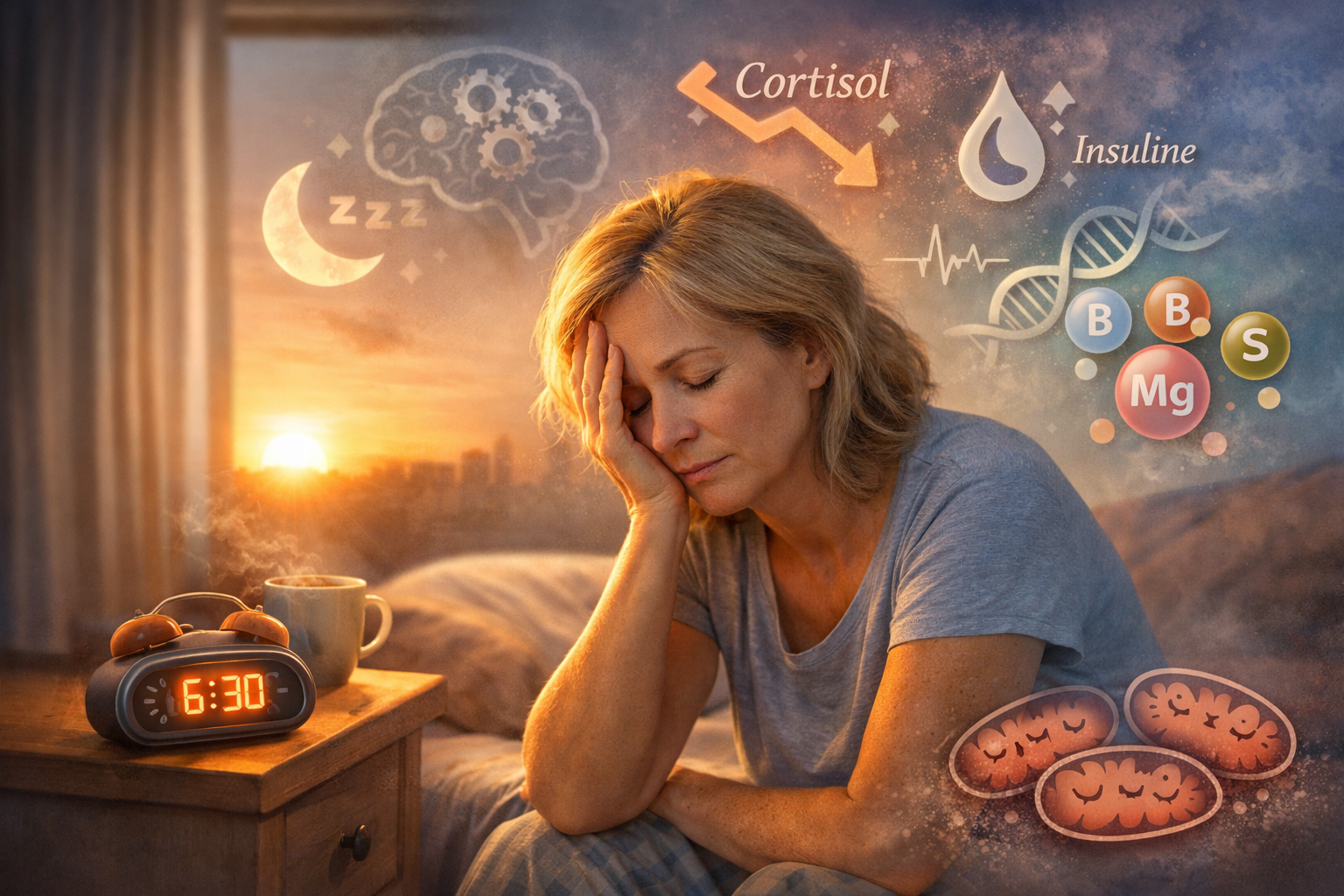
You may recognize this.
You go to bed on time, sleep seven or eight hours, and still... wake up tired. As if your body did not use the night to recover at all.
Maybe you hit snooze several times.
Maybe you need coffee just to get going.
And maybe you even think: "Is this just what getting older feels like?"
The good news: it does not have to be this way. If you consistently wake up exhausted even though you sleep enough, it is often a signal from your body that something underneath the surface is out of balance.
Within orthomolecular and hormonal medicine, we do not only look at how long you sleep, but especially at how well your body can recover during the night.
Sleep is recovery - but only if your body is able to recover
Important processes happen during the night:
- your brain processes stimuli and information
- your hormones are recalibrated
- your cells repair and renew
- your energy reserves are replenished
If one or more systems are out of balance, you may sleep, but not truly recharge.
The result: a body that wakes up while the battery is still half empty.
Possible causes from an orthomolecular and hormonal perspective
1. A disrupted stress system (cortisol)
Your body follows a natural day-night rhythm of the stress hormone cortisol.
- In the morning, cortisol should rise so you wake up alert
- In the evening, it should drop so you can relax and sleep
During prolonged stress, this rhythm can become disrupted. Some people still have too much cortisol in the evening, while others have too little in the morning.
The result: waking up tired, even after a full night of sleep.
2. Blood sugar fluctuations at night
When blood sugar is unstable, your body may release stress hormones at night to keep glucose levels stable.
This can lead to:
- restless sleep
- waking around 3-4 a.m.
- waking up exhausted
Nutrition often plays a bigger role than people expect.
3. Deficiencies in essential nutrients
For quality sleep and recovery, your body needs enough building blocks, such as:
- magnesium
- B vitamins
- omega-3 fatty acids
- amino acids
Deficiencies can make the nervous system more stress-sensitive and reduce nighttime recovery.
4. Thyroid or hormonal imbalance
Hormones such as:
- thyroid hormones
- progesterone
- estrogen
- melatonin
also play a key role in energy and sleep quality.
During hormonal shifts - for example around stressful periods, after pregnancy, or during menopause - your body's ability to recover can change.
What can help you wake up rested again?
1. Restore your biological rhythm
A few simple habits can already make a difference:
- Morning light within 30 minutes after waking
- Daily movement
- Less screen light in the evening
- A consistent bedtime
This helps synchronize your hormone system again.
2. Stabilize blood sugar
Nutrition can have a major impact on energy and sleep quality.
Think about:
- enough protein at each meal
- healthy fats
- fewer fast sugars
- 2 to 3 meals per day at consistent times
- no more eating after 8:00 p.m.
This keeps your energy more stable during the day and makes nighttime stress activation less likely.
3. Replenish deficiencies strategically
Orthomolecular supplementation may support the body, for example with:
- magnesium for nervous system relaxation
- B vitamins for energy production
- adaptogenic herbs for the stress system
- omega-3 fatty acids for hormonal balance
Personal guidance is important, because every body responds differently.
4. Looking at the body as a whole
The key is often not one single solution, but understanding the whole picture:
- nutrition
- stress load
- hormones
- gut health
- lifestyle
When these puzzle pieces fall back into place, energy often returns naturally.
You do not have to feel "just tired"
Many people live with fatigue for years because they think it is just part of life.
But waking up structurally exhausted is not a personality trait - it is a signal.
A signal that your body may need support.
By looking at nutrition, hormones, stress, and micronutrients, you can often discover where recovery is getting stuck. And that is where the path back to energy begins.
✨ Do you recognize yourself in this story?
Then it may be valuable to take a deeper look at what your body needs to
truly recover during the night.
Waking up with energy is not a luxury.
It is how your body is meant to function.