Hot flashes & restlessness - when your body seems to have a rhythm of its own
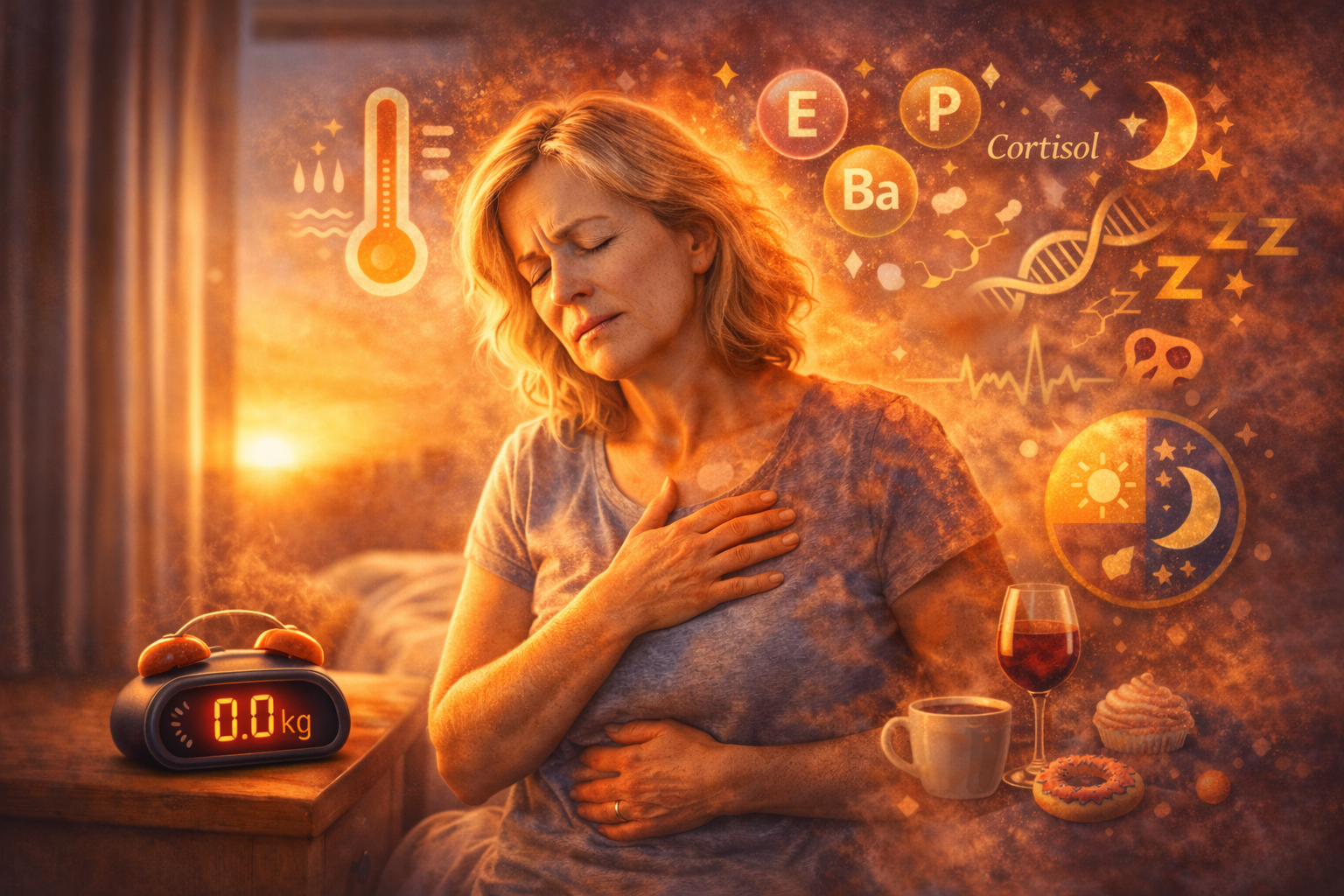
It can happen suddenly.
A warm wave moving through your body.
Your heart feeling like it is beating faster.
A sense of inner unrest, even when nothing obvious is wrong.
Maybe you notice your sleep getting worse.
That you get irritated more quickly.
Or that your body suddenly behaves differently than you are used to.
Many women recognize this phase. And yet it can be confusing when you notice your body and nervous system feel less stable than before.
Hot flashes and inner restlessness are often signals that the hormonal system is changing. Within orthomolecular and hormonal medicine, we look at the processes behind these symptoms - and how to support the body again.
What happens hormonally during hot flashes?
Hot flashes are often associated with menopause, but they can also appear earlier in life when hormones begin to shift.
The key players include:
- estrogen
- progesterone
- cortisol (stress hormone)
- melatonin (sleep hormone)
When the balance between these hormones changes, it can affect the temperature control center in the brain.
This center - in the hypothalamus - normally regulates body temperature very precisely. But when estrogen fluctuates, this system can become more sensitive.
The result: a sudden heat response in the body.
Why restlessness often appears alongside hot flashes
Many women notice hot flashes are not only physical warmth, but are also accompanied by:
- heart palpitations
- inner restlessness
- feeling tense
- poorer sleep
This is because hormones are closely linked to the nervous system.
When progesterone decreases - a hormone with a calming effect on the brain - the nervous system can become more sensitive to stress and stimuli.
That is why hot flashes can sometimes feel like a kind of stress response of the body.
The role of the day-night rhythm
Our body works according to a biological rhythm of about 24 hours. This rhythm regulates, among other things:
- hormone production
- sleep quality
- body temperature
- energy level
When this rhythm is disrupted - for example by stress, irregular sleep times, or a lot of evening screen light - hormonal symptoms can intensify.
Many women notice that hot flashes and restlessness are stronger in the evening or at night.
Factors that can intensify hot flashes
Besides hormonal changes, lifestyle factors also play a role.
For example:
- chronic stress
- caffeine or alcohol
- blood sugar fluctuations
- little movement
- poor sleep quality
These factors can activate the nervous system and make the body more sensitive to temperature and stress reactions.
How can you support your body?
Although hormonal changes are a natural process, there are many ways to support the body during this phase.
1. Stability in your daily rhythm
The nervous system responds well to predictability.
So try as much as possible to:
- get up at consistent times
- maintain a regular sleep rhythm
- get daily daylight and movement
This helps the hormone system stabilize again.
2. Support through nutrition
Nutrition can play an important role in hormonal balance.
Think, for example, of:
- adequate protein
- healthy fats
- fiber-rich foods
- stable blood sugar
In addition, nutrients such as magnesium, B vitamins, and omega-3 fatty acids are important for the nervous system.
3. Stress regulation
Because the stress system is closely linked to hormonal balance, it can help to build in daily moments of relaxation.
For example:
- calm walks
- breathing exercises
- yoga or gentle movement
- screen-free moments
Even small changes can help the nervous system experience more calm.
4. Targeted orthomolecular support
In some situations, the body can benefit from extra support, for example through specific nutrients or plant extracts that support the hormonal system.
Because every woman responds differently, it is important to personalize this support.
Your body is recalibrating
Although hot flashes and restlessness can be difficult, they are often part of a process in which the body is hormonally adjusting.
That does not mean you just have to live with it.
When you understand what is happening in your body, you can often also discover how to give the system more calm and stability again.
✨ Do you recognize hot flashes, inner restlessness, or sleep issues?
Then it can be valuable to look together at what your body needs in this
phase.
When hormones, the nervous system, and lifestyle align better again,
many women experience more balance, energy, and calm.